Mostrando entradas con la etiqueta gabriela adelstein. Mostrar todas las entradas

25 de julio de 2021

Bea Medicine, Ina 1979


Dancing Lakota women, 1993
Fotografía de Horst Wackerbarth
INA 1979

Una mujer de muchos nombres
todas las designaciones de familia
Tuwin: tía
Conchi: abuela
Hankashi: prima
Ina: madre
todas honorables,
todas buenas.

INA 1979

A woman of many names 
all kinship designations-.
Tuwin-aunt.
Conchi-grandmother.
Hankashi—female cousin.
Ina-mother
all honorable,
all good.


Beatrice "Bea" Medicine
(Bismarck, Dakota del Norte, EE.UU., 1923 - 2005)
POETA/ANTROPÓLOGA/EDUCADORA/ERUDITA/LAKOTA
«Ina 1979» en Beth Brant (ed.), A Gathering of Spirit: Writing and
Art by North American Indian Women, Montpelier, Sinister Wisdom Books, 1984
W.W.Norton Company, 1995
Traducción para RIMAGabriela Adelstein

27 de septiembre de 2020

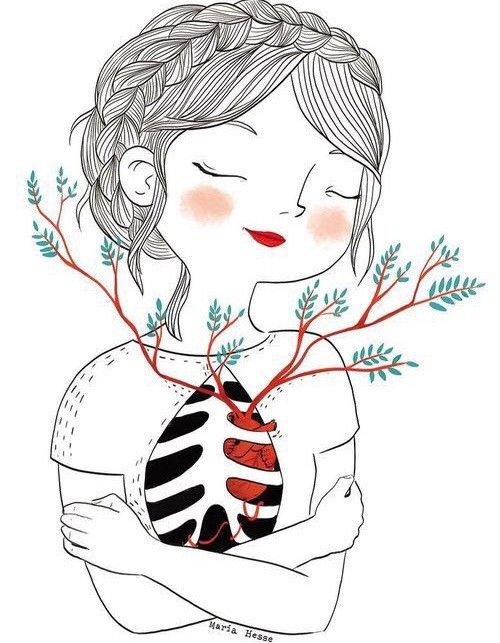
Meg Kearney, Credo

Ilustración de María Hesse

CREDO

Yo creo en la gallina antes que el huevo
aunque creo en el huevo. Yo creo que
comer es una forma de tacto llevada
a sus últimas consecuencias; yo creo que el chocolate
hace bien; yo creo que soy una zurda
en un mundo diestro, lo que no
me convierte en torpe, ni anormal, ni siniestra.
creo que “normal” es solo un ciclo del
lavarropas; creo que el toque
de manos tiene el poder de sanar, aunque
nada llenará nunca este inconmensurable
agujero en el centro de mi pecho. Yo creo
en besar; creo en el correo; creo
en la sal por sobre el hombro, una olla
vigilada nunca hierve, y si me siento junto
a mi buzón esperando la carta que quiero
nunca llegará—no por
superstición, sino porque no es así
como funciona la vida. Yo creo en el trabajo:
llamados telefónicos, tipear, multiplicar,
café negro, escribir escribir escribir, cavar
cavar cavar, barrer barrer. Yo creo en
un lento, tortuoso barrido de lengua
hacia abajo por el vientre de mi amante; creo que he
sido vuelta loca de amor más de una vez
y es una buena idea no dar nombres.
Cavar en busca de nombres es parte de mi trabajo,
pero eso es otro poema. Yo creo
que hay una diferencia entre los varones y
las mujeres y agradezco a Dios por ello. Yo creo
en Dios, y si me abrís la puerta
y cargás mis libros, me aseguraré de preguntar
tu nombre. ¿Cuál es tu nombre? ¿Vos
creés en fantasmas? Yo creo
que la mañana en que murió mi padre lo oí
silbando “Danny Boy” en el baño,
y una semana más tarde lo vi parado en
el living con una valija en la
mano. Nunca pudimos despedirnos, dijo
él, y yo dije no creo en las
despedidas. Yo creo que es por eso que tengo
este agujero en mi pecho; a veces es
rabioso; a veces es incoherente. Yo
creo que voy a sobrevivir. Yo creo que
“acostarse temprano y levantarse temprano” es
una forma aburrida de vivir. Yo creo que lxs buenxs
poetas toman prestado, lxs grandes poetas roban, y
si solo dejáramos de intentar ser felices
podríamos pasarla bastante bien. Yo
creo que el tiempo no sana todas las heridas,
creo en comprar flores por ninguna
razón; creo en “Hazte Cargo, No
Contamines”, “Leer es Fundamental”,
el Yankee Stadium pertenece al Bronx,
y los mejores bagels de New York son
hervidos y horneados en la esquina de Primera
y 21. Yo creo en Santa
Claus, en Jimmy Stewart, en los pétalos de ZuZu,
en el Día del Árbol, y en esa bebé fea con la que sigo
soñando—vive dentro de mí
abriendo y cerrando su ancha boca.
Creo que nunca degustará la
leche de su madre; nunca será
hermosa; siempre se preguntará cómo
es nacer; y si vos ponés
tu mano justo acá—tocame bien
acá, como si esto fuera todo lo que importa,
todo lo que siempre has querido, yo creo que
algo podría moverse dentro de mí,
y sería más de lo que puedo soportar.

Traducción al castellano Gabriela Adelstein, Buenos Aires, 2020


Ilustración de María Hesse

CREED

I believe the chicken before the egg
though I believe in the egg. I believe
eating is a form of touch carried
to the bitter end; I believe chocolate
is good for you; I believe I'm a lefty
in a right-handed world, which does not
make me gauche, or abnormal, or sinister.
I believe "normal" is just a cycle on
the washing machine; I believe the touch
of hands has the power to heal, though
nothing will ever fill this immeasurable
hole in the center of my chest. I believe
in kissing; I believe in mail; I believe
in salt over the shoulder, a watched
pot never boils, and if I sit by my
mailbox waiting for the letter I want
it will never arrive—not because of
superstition, but because that's not
how life works. I believe in work:
phone calls, typing, multiplying,
black coffee, write write write, dig
dig dig, sweep sweep. I believe in
a slow, tortuous sweep of tongue
down the lover's belly; I believe I've
been swept off my feet more than once
and it's a good idea not to name names.
Digging for names is part of my work,
but that's a different poem. I believe
there's a difference between men and
women and I thank God for it. I believe
in God, and if you hold the door
and carry my books, I'll be sure to ask
for your name. What is your name? Do
you believe in ghosts? I believe
the morning my father died I heard him
whistling "Danny Boy" in the bathroom,
and a week later saw him standing in
the living room with a suitcase in his
hand. We never got to say good-bye, he
said, and I said I don't believe in
good-byes. I believe that's why I have
this hole in my chest; sometimes it's
rabid; sometimes it's incoherent. I
believe I'll survive. I believe that
"early to bed and early to rise" is
a boring way to live. I believe good
poets borrow, great poets steal, and
if only we'd stop trying to be happy
we could have a pretty good time. I
believe time doesn't heal all wounds;
I believe in getting flowers for no
reason; I believe "Give a Hoot, Don't
Pollute," "Reading is Fundamental,"
Yankee Stadium belongs in the Bronx,
and the best bagels in New York are
boiled and baked on the corner of First
and 21st. I believe in Santa
Claus, Jimmy Stewart, ZuZu's petals,
Arbor Day, and that ugly baby I keep
dreaming about—she lives inside me
opening and closing her wide mouth.
I believe she will never taste her
mother's milk; she will never be
beautiful; she will always wonder what
it's like to be born; and if you hold
your hand right here—touch me right
here, as if this is all that matters,
this is all you ever wanted, I believe
something might move inside me,
and it would be more than I could stand.


Meg Kearney
(Nueva York, EE.UU., 1964)
POETA/ESCRITORA/EDUCADORA
de An Unkindness of Ravens, BOA Editions, Rochester, New York, 2001
Traducción al castellano Gabriela Adelstein, Buenos Aires, 2020
Propuesta de traducción de Emma Gunst
para leer + en MISSOURI REVIEW
su WEB


10 de agosto de 2019

Nellie Wong, En las grietas de la ira (+1)


s/d del autor de la fotografía
EN LAS GRIETAS DE LA IRA

Ai ya, yow meng ah! Cómo podemos siquiera empezar
a saber, a entender si cerramos nuestros oídos,
si cerramos nuestros ojos a la luna,
hacemos cráteres en nuestros propios cuerpos, ignoramos
el toque humano?
Tengo ahora a mi madre en mis brazos
aunque ella no está aquí.
Nunca me tuvo en sus brazos
nunca me tuvo en sus brazos
pero no es demasiado tarde,
no cuando respiro y descifro su voz,
aunque dura, estridente, llamando
a través de las escamaciones de mi piel.
… Todavía busco a mi madre
que no conoció fama ni notoriedad, que pelaba camarones
por una monedas diarias…
Escribió un poco en inglés, un poco en chino
y lloró después del nacimiento
de cada hija.
Ella es la poetisa que veía y que no me vio.

en Of Woman Born: Motherhood as Experience and Institution,
de Adrienne Rich, Norton, 1976
Traducción de Gabriela Adelstein

ON THE CREVICES OF ANGER

Ai ya, yow meng ah! How can we even begin
to know, to understand if we closeour ears,
if we shut our eyes to the moon,
crater or own bodies, ignore
the human touch?
I hold my mother now in my arms
though she's not here.
She never held me
she never held me
but it's not too late,
not when I breathe and decipher her voice,
though harsh, shrill and calling
through my skin's flakings.
...I still seek my mother
who knew no fame, no notoriety, who selled shrimps
for pennies a day...
She wrote some English, some Chinese
and she wept after the birth
of each daugther.
She is the poet who saw and didn't see me.


N E L L I E  D I X I T

Pienso que muchas de nosotras hemos sido engañadas por los medios de comunicación masivos, por el acondicionamiento social de nuestras vidas que se deben vivir con grandes explosiones, como ‘enamorarnos’ o ‘rendirnos al albedrío’, y dejarnos hechizar por genios mágicos que realizan todo deseo nuestro, cada anhelo de la niñez. Los deseos, sueños y fantasías son partes importantes de nuestras vidas creativas. Son los pasos que una escritora integra en su técnica. Son el espectro de los recursos para alcanzar la verdad, el corazón de las cosas, la inmediación y el impacto del conflicto humano” 

en Flows from the Dark of Monsters and Demons: Notes on Writing /
Derrames desde lo oscuro de monstruos y demonios: apuntes sobre la escritura
Radical Women pamphlet / Panfleto de Mujeres Radicales, San Francisco, 1979
extraído de Niña Bestia


Nellie Wong
(Oakland, California, EE.UU., 1934)
POETA/ACTIVISTA FEMINISTA Y SOCIALISTA
contacto nelliewongpoet2@yahoo.com 
para leer + en Big Bridge
en WIKIPEDIA

9 de agosto de 2019

Audre Lorde, No hay poemas honestos sobre mujeres muertas (+2)


s/d del autor

NO HAY POEMAS HONESTOS SOBRE MUJERES MUERTAS

Qué queremos unas de otras 
después de haber contado nuestras historias
Queremos
ser curadas queremos 
una musgosa calma que crezca sobre nuestras
cicatrices
queremos
la hermana todopoderosa que no asuste 
que hará que el dolor se vaya
que el pasado no sea así.

(f r a g m e n t o)
citado por Adrienne Rich en el ensayo Nacemos de Mujer, 1986
Traducción de Gabriela Adelstein


THERE ARE NO HONEST POEMS ABOUT DEAD WOMEN

What do we want from each other
after we have told our stories
do we want
to be healed do we want
mossy quiet stealing over our scars
do we want
the powerful unfrightening sister
who will make the pain go away
mother’s voice in the hallway
you’ve done it right
the first time darling
you will never need
to do it again.

Thunder grumbles on the horizon
I buy time with another story
a pale blister of air
cadences of dead flesh
obscure the vowels.

de Our Dead Behind Us, New York: Norton, 1986


B O N U S  T R A C K 


Foto de Eye for Ebony en Unsplash

Nos hemos escogido como compañeras
para compartir el filo de nuestras batallas,
la guerra es sólo una,
si la perdemos
llegará el día en que la sangre de las mujeres
cubrirá, reseca, un planeta muerto.
Si vencemos,
ya sabéis que buscamos
más allá de la historia
una relación nueva y mejor.

de La hermana, la extranjera, (1982 - 2002), 
Editorial Horas y horas, Madrid, 2002


We have chosen each other
and the edge of each others battles
the war is the same
if we lose
someday women’s blood will congeal
upon a dead planet
if we win
there is no telling
we seek beyond history
for a new and more possible meeting.

(1980)

de Sister Outsider, Crossing Press, CA. 1984


HABLA UNA MUJER

Por la luna marcada y por el sol tocada
aunque mi magia no está escrita
cuando el mar dé media vuelta
Dejará tras de sí mi forma.
No busco ningún favor
intocada por la sangre
implacable como la maldición del amor
permanente como mis errores
o mi orgullo
no mezclo
amor con pena
ni odio con desprecio
y si me conocieras
mira en las entrañas de Urano
donde bate el incansable océano.

No habito
mi nacimiento ni mis divinidades
soy intemporal y a medio hacer
y busco aún
a mis hermanas
brujas en Dahomey
que me lleven en sus telas enroscadas
como hacía nuestra madre
en duelo.

He sido mujer
largo tiempo
cuídate de mi sonrisa
traiciono con magia antigua
y la furia nueva del mediodía
con todos tus amplios futuros
prometidos
yo soy
mujer
y no blanca.

en El unicornio negro, Ediciones Torremozas, 2019
Traducción de Jimena Jiménez Real


copyright Dagmar Schultz
Audre Geraldine Lorde
(Harlem, NY, EE.UU., 1934-1992)
ESCRITORA/POETA/ACTIVISTA
para leer MÁS

16 de septiembre de 2017

Suheir Hammad, Destino manifiesto


Fotografía de Frédéric Boissonnas


DESTINO MANIFIESTO

nosotras cuatro
sentadas atendiendo
platos de arroz y porotos en un restaurant cubano
nosotras deberíamos haber sido otras personas
con otras personas

una que debería haber sido una aria neonazi criadora de bebés
o una torta odiadora de hombres blandedora de machete
era una amante tanto de hombres como de mujeres una chica de motines y una poeta

otra que debería haber sido una testiga de jehová golpeando puertas
o una loquita de video, girando en remolino
era una estudiosa de la gloria africana amante del conocimiento y una poeta

la otra
debería haber sido una fría elitista terrateniente
una adinerada ejecutiva robot
era una combatiente por la independencia amante de una isla y una poeta

y yo
que debería haber sido una doctora de medicina occidental
o casada por lo menos comprometida pero siempre obediente
yo buscadora de la verdad amante de la humanidad y una poeta

extrañando a mi familia
que no podría entender
nosotras cuatro todas extrañando familias que no entenderían
creando una familia
nosotras luchando por entender
estábamos donde debíamos estar
somos quienes tenemos que ser


MANIFEST DESTINY

we four
sitting nursing
plates of rice and beans in a cuban diner
we should have been other people
with other people

one who should've been a neo-nazi aryan baby breeder
or a machete wielding man hating dyke
was a lover of both men and women girl of riot and a poet

another who should've been a witness of jehovah knocking down doors
or a gyrating video hoochie
was a scholar of african glory lover of knowledge and a poet

the other
should've been a cold landowning elitist
a rich corporate robot
was a fighter for independence lover of an island and a poet

and me
who should've been a doctor of western medicine
or married at least engaged but always obedient
me searcher of truth lover of humanity and a poet

missing my family
who couldn't understand
we four all missing family who wouldn't understand
creating a family
we struggling to understand
we were where we needed to be
we are who we have to be


Suheir Hammad
(Amán, Jordania, 1973)
Reside en Nueva York, EE.UU. desde los 5 años
POETA/PERFORMER/ACTIVISTA POLÍTICA
edited by Nathalie Handal, New York: Interlink Books, 2001
Traducción de Gabriela Adelstein, Buenos Aires, 2009
para leer + en EXPRESS DEL GATO


7 de diciembre de 2016

Carolyn Gage, La furia es una disciplina...


Collage de Eugenia Loli

La furia es una disciplina.  
Practiqué mi ira 
como alguna gente practica 
el piano. Lleva energía 
indignarse. Es trabajo duro.  
Especialmente cuando el abuso 
se vuelve rutina. Algunos 
días estaba cansada y dolorida 
y sentía lástima por mí misma.  
Algunos días sólo quería hacer 
como si no los oyera, 
o como si yo tuviera un espíritu 
lo suficientemente elevado 
como para perdonarlos.  
Pero siempre me decía 
a mí misma, “Jeanne, si no te 
resistís a este abuso, entonces 
lo aceptás, y si lo aceptás, 
entonces lo merecés, y 
si lo merecés, sos 
mujer muerta y eso es 
exactamente lo que quieren”. Así 
que sin importar cuán enferma, 
cuán cansada, 
cuán débil me sentía, 
siempre me ponía a la altura de la situación, 
devolvía el insulto, protestaba 
contra el abuso, y reclamaba 
mis derechos como ser humano.  
Esto, por supuesto, no tenía ningún efecto 
sobre ellos, pero me mantuvo viva.

Anger is a discipline. I
practiced my anger like
some people practice
piano. It takes energy to be
outraged. It's hard work.
Especially when the abuse
becomes routine. Some
days I was tired and sore
and feeling sorry for myself.
Some days I just wanted to
pretend I didn't hear them,
or that I was exalted
enough to forgive them.
But I would always say to
myself, 'Jeanne, if you don't
resist this abuse, then you
accept it, and if you accept
it, then you deserve it, and
if you deserve it, you're a
dead woman and that's
exactly what they want.' So,
no matter how sick, how
tired, how weak, I would
always rise to the occasion,
throw back the insult, protest
the abuse, and demand
my rights as a human being.
Of course, this had no effect
on them, but it kept me
alive.

(en la contratapa de Sinister Wisdom, Summer/Fall, 1988)


Carolyn Gage
(Portland, OR., EE.UU., 1952)
AUTORA Y DIRECTORA DE TEATRO/DRAMATURGA/ACTRIZ
PERFORMER/ACTIVISTA
de The Second Coming of Joan of ArcHerbooks, 
Santa Cruz, CA., 1994
Traducción de Gabriela Adelstein
Propuesta de traducción de Emma Gunst
su WEB

18 de noviembre de 2016

Jennifer Franklin, El filósofo no dijo


El caballo de Turín, 2011

EL FILÓSOFO NO DIJO

¿Qué secreto había descubierto Nietzsche
cuando caminaba las calles de Turín
antes de arrojar sus brazos alrededor
de un caballo que estaba siendo golpeado y colapsar
en un coma que duró una década?  Aferrándose
a la bestia marrón encogida de miedo, dijo
Madre, soy estúpido.  La cabellera salvaje y un traje
de tweed de tres piezas constreñían el cuerpo
que sostenía la mente que sabía demasiado.
¿Por qué estoy excavando respuestas de hombres muertos
cuando ellos estaban todos tan locos como yo?
El caballo, sus ojos huecos como los
del elefante birmano al que Orwell disparó
décadas más tarde, se parecía a toda
criatura traicionada. Quizás Nietzsche
vio el shock en los ojos del animal—
cómo todo humano contiene la capacidad
de infligir crueldad.  La mirada que se convierte
en reconocimiento, en resignación, en un ojo
que refleja un campo lleno de caballos caídos.

THE PHILOSOPHER DID NOT SAY

What secret had Nietzsche discovered
when he walked the Turin streets
before he flung his arms around
a horse being beaten and collapsed
into a decade-long coma? Clinging
to the cowering brown beast, he said
Mother, I am stupid. Wild hair and a three-
piece tweed suit constrained the body
that held the mind that knew too much.
Why am I mining dead men for answers
when they were all as mad as I am?
The horse, his eyes hollow as those
of the Burmese elephant that Orwell shot
decades later, had the look of every
betrayed creature. Perhaps Nietzsche
saw the shock in the animal’s eyes—
how every human contains the capacity
to inflict cruelty. The look that turns
to recognition, to resignation, to an eye
reflecting a field full of fallen horses.


JENNIFER DIXIT

"As a sophomore at Brown, I took Martha Nussbaum’s course on Nietzsche, in which we read most of his texts. Nussbaum’s brilliant mind and her expertise of the classics, ethics, and feminism greatly impressed me that autumn. My current poetry manuscript grapples with classical stoical and modern existential philosophy. The work is particularly influenced by Nietzsche’s concept of amor fati, love of fate, even—no, especially—in the face of tragedy. The poem is a meditation on what might have prompted Nietzsche’s last words—a possible dismissal of all that he had believed and all that he had written.”

(extraído de acá)


Jennifer Franklin
(Estados Unidos)
Reside en Nueva York
Coeditora de Slapering Hol Press
Traducción de Gabriela Adelstein
Propuesta de traducción de Emma Gunst
para leer MÁS
su WEB

Related Posts Plugin for WordPress, Blogger...